
Differences in rules between different variants of online poker
When online poker swept the world in the early 2000s, Texas Hold'em was in the limelight. But times are changing. While Hold'em is still the natural entry point for most people, the digital landscape has opened the doors to a host of other variants that require a completely different tactical lens. To the untrained eye, most games look the same. It's all about chips, decks of cards and betting rounds. But those who scratch the surface quickly realise that the technical nuances are enormous. Understanding in depth how the rules differ between, say, Omaha, Stud and modern instant formats is often what separates a winner from a loser.
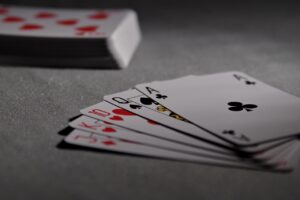
Texas Hold'em: the staple with hidden depths
Texas Hold'em is based on a deceptively simple structure. Each player is dealt two cards of their own, combined with five community cards on the table. The goal is to construct the best five-card hand. What makes Hold'em so unique, and often surprises beginners, is the freedom. You can choose to use both of your own cards, just one of them, or indeed neither if the five cards on the table happen to be stronger than your hand can contribute. The dominant form online is 'No Limit', where the stakes are limited only by what you have in front of you on the table. This leaves room for the grand gestures and psychological showdown that have become the game's hallmark. In a casino with Visa you can get started with Texas Hold'em and play against human opponents in minutes, if they have a poker client. If they don't, you can play live casino based on the same rules, where you play against the house in the form of a dealer who is responsible for ensuring you have a good experience.
Omaha: Where maths takes over
Many people see Omaha as a natural extension of Hold'em, but the rules contain a catch that changes everything. Here you get four (sometimes more) cards in your hand, but you are forced by the rules to use exactly two of them along with three from the table. This seemingly small detail means that you can never "play the table" in the same way as in Texas.
As each player sits on more cards, the number of possible combinations increases dramatically. A hand that would normally be very strong, like a three of a kind in kings, is often a vulnerable hand in Omaha because the probability of someone sitting on a ladder or suit is so much higher. Online, Omaha is most often played as "Pot Limit", which puts more focus on calculations and probability theory rather than pure bluffing.
Seven Card Stud: A challenge for the memory
Before the advent of the internet, Seven Card Stud was the obvious choice in many smoky game rooms. Unlike Hold'em and Omaha, there are no community cards at all. Instead, each player is dealt a mix of face-down and face-up cards over seven different rounds. Online, this requires a completely different mental capacity. You need to have the discipline of remembering what cards were shown by players who later folded; if you are chasing an ace of hearts but saw it in an opponent's hand in round two, your hand is effectively dead. The game moves more slowly and is usually played with fixed-limit bets, which rewards patience over a distinctly offensive approach.
Lowball and Hi-Lo: when worst is best
For those who want to challenge their logical ability There are further variants such as Razz or Hi-Lo games. In Razz, the whole hierarchy is turned upside down - the aim is to have the lowest possible hand, with aces counting as low and ladders not counting against you. In Hi-Lo variants of Omaha or Stud, the pot is split down the middle: half goes to the best traditional hand and half to the best 'low' hand. Learning to navigate these rules requires being able to evaluate your hand from two completely different perspectives simultaneously.
The digital innovations: Instant Poker and Short Deck
Online poker has also given birth to variants that would be almost impossible to play in physical form. Instant poker, often referred to as Zoom or Snap, keeps the basic rules but changes the pace completely. As soon as you click "fold", you are thrown to a new table with new opponents and a new hand. It removes the dead time but places enormous demands on quick decisions.
Another trend that has taken over the high stakes scene is Short Deck (6+). Here, all the twos, threes, fours and fives have been weeded out of the deck. This not only changes how often you get good hands, but it also changes the rankings themselves. Since it is now mathematically harder to get a suit than a jack, the suit has been given higher status in most Short Deck rules. Jumping into such a game with a traditional approach can quickly become a costly lesson.

